Pokémon
Nov 26, 2025




“Back to school, back to school.” As we inch closer to September—and the return of both college football and the NFL—classrooms across the country are refilling with students. While algebra was never my strong suit, I do know one thing: trading cards. Lucky for you, I’m your new teacher. Welcome to card school.
Today’s lesson: slabs.
As you likely already know, every card on Courtyard, from packs to the marketplace, is slabbed. Why? Because slabs = authenticity. But there’s far more to slabs than the legitimacy of the carefully contained card. That’s why we’re breaking it all down for you in Slabs 101.
Whether you’re a lifelong collector or just ripped your first pack, you’ve likely heard of brands like PSA, Pokémon powerhouse CGC, and BGS (part of Beckett, the company that standardized card pricing). Along with these three storied companies, others, such as SGC and TAG, a relative newcomer, make up the top tier of the space. All three third-party companies are looking at the same general guidelines:
Every grading company has its own nuances, but all are scored out of 10, with PSA, the largest of the three, referring to its best score as a “Gem Mint”—which is as close to factory fresh as it gets. You can go deep here, with BGS awarding half-point grades, but the general idea is that you’re looking for cards that are in pristine condition. Regardless of their grade, these companies will take your card and put it into a plastic case—a slab—that proudly displays its score, along with things like a certification number that allows others to research the population (pop) of cards that have received specific scores.
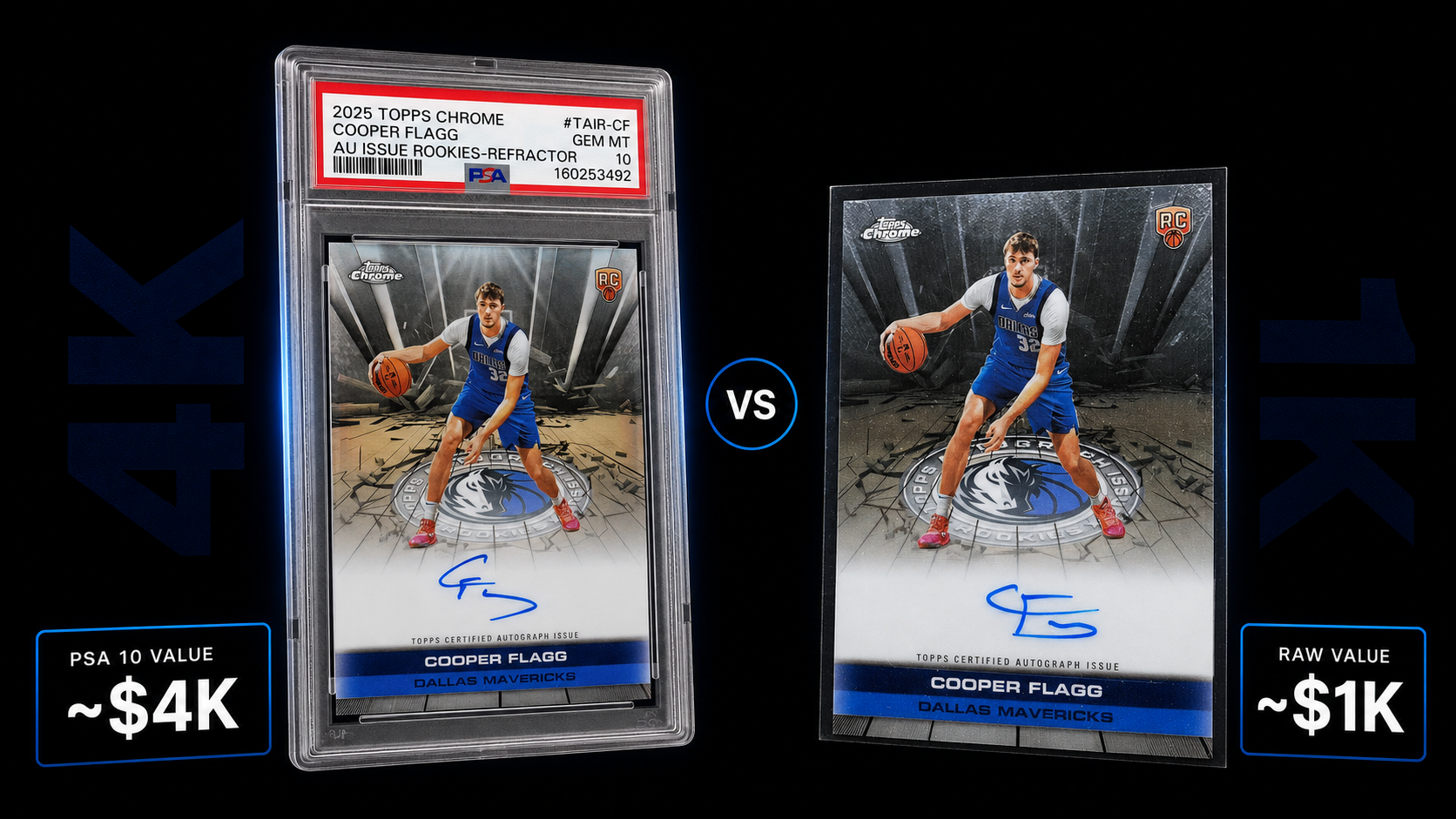
The vast majority of cards are sold ‘raw’, meaning they’re not housed within any sort of container other than the foil packs you purchase them in. (One exception to the rule is Panini One and One, but we won’t go down that road just yet!) Because of this, collectors run the risk of their cards being damaged. Imagine you pull a Cooper Flagg rookie auto…only to have it fall from your lap and dent on the floor five minutes later. The horror!
This is where slabs come in as protective cases to house your cards. Sure, there are options like penny sleeves, top loaders, and one-touch card holders, but slabs go the extra mile to guarantee your card is as safe as possible. That said, protection is only half the battle.
Number 1 pick Cooper Flagg had a standout debut NBA season, averaging 21 points, 6.7 rebounds, and 4.5 assists, along with 1.5 steals and just under 1 block per game. He was the chase card for the 2025-26 season, and his cards continue to demand sky high prices, such as the 2025 Topps Chrome Autograph Issue Rookies Refractor currently found within our Basketball Ultra Pack…well if you’re going to put a paycheck (or far, far more) into a single card, you want to make sure it’s legit, right? That’s where grading comes in, providing buyers with trust that the card within the slab is, in fact, the real deal—not some janky counterfeit intended to rob you blind. That’s part of why graded cards command higher prices: You know the authenticity and condition of a card without having to take a buyer’s word for it. And that’s why slabbed Cooper Flagg’s go for far, far, more (to double digit degrees of multiplicity) than his raw cards.
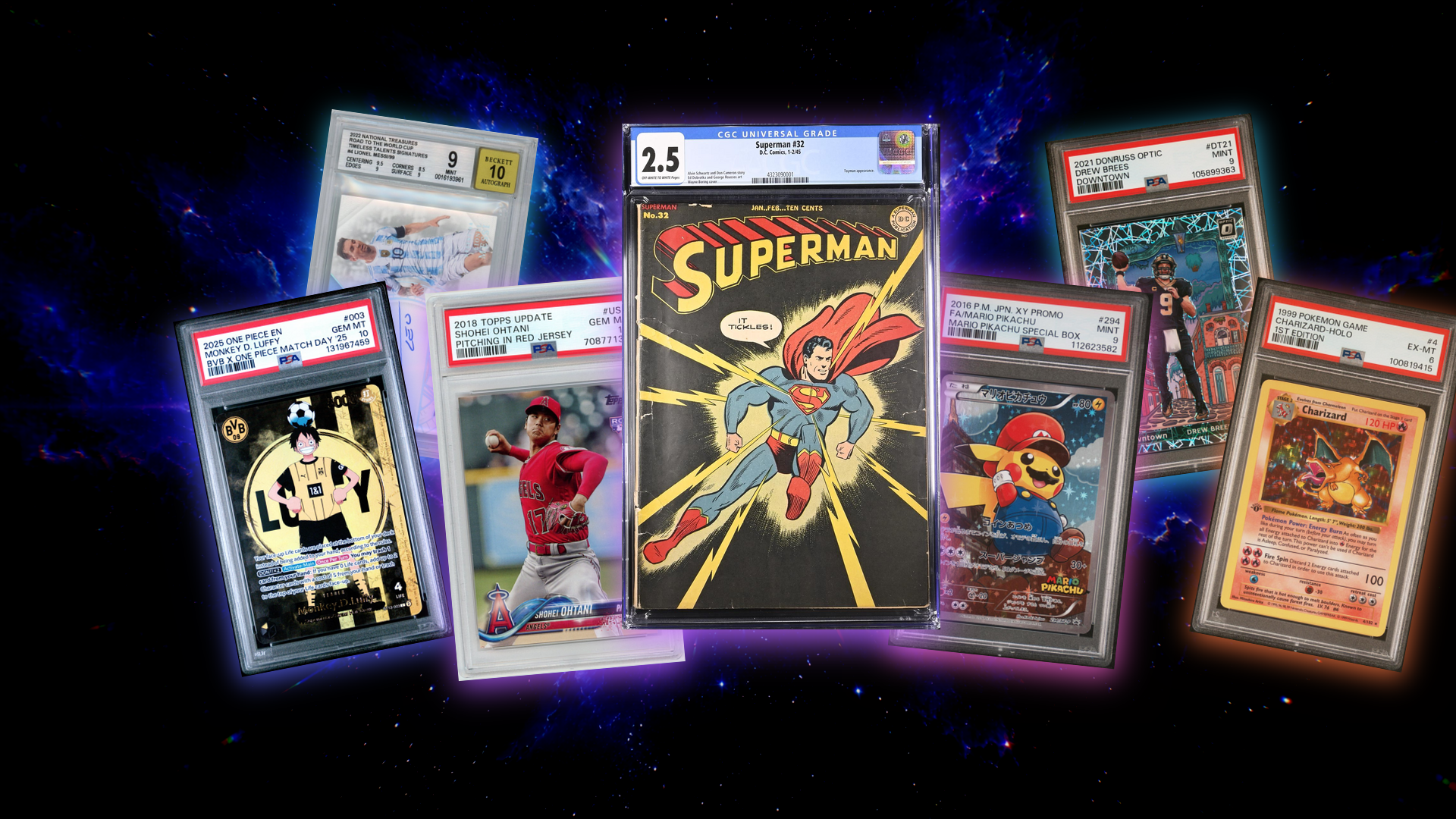
Buying raw cards on the open market relies heavily on trust. Is this card what they say it is? Are the pictures of the front, back, and corners hi-res enough to judge their potential grade? Rather than leave this ambiguity up to the buyer, we only offer cards that have been authenticated and graded by PSA, CGC, and BGS. This means you can have peace of mind around authenticity and quality when hunting for grails like a 1st Edition Charizard, a Tom Brady rookie, or a Michael Jordan insert, instead of being left holding something fake or damaged.
This same logic extends to other offerings on Courtyard as well. Whether you’re buying watches, magazines and comics, or coins, including those that were recovered from literal shipwrecks, everything on Courtyard comes authenticated so there’s no doubt about its validity. What you see is what you get.
Want to take a look at all of the slabs on Courtyard? Check out our selection of packs, each of which contains one slabbed card, or head over to our marketplace where you can buy slabbed cards ranging from soccer stars to baseball’s best.

Get the app ↗